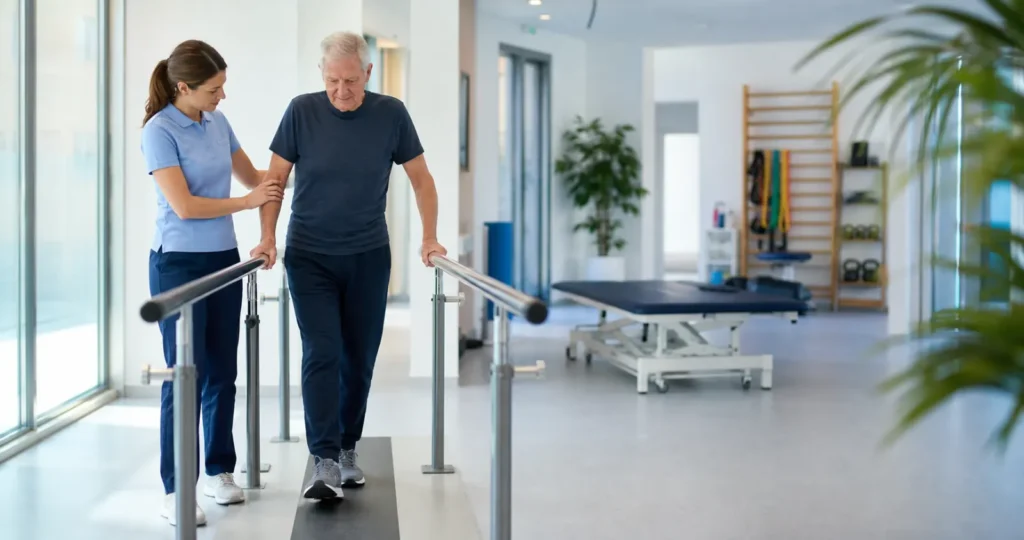
Rehabilitation after an amputation begins with the person’s health, type of amputation and goals. Early priorities may include wound care, positioning, strength, safe transfers and learning to move with a wheelchair or walking aid.
A prosthetic limb may be suitable for some people, but not everyone. Rehabilitation can still support independence whether or not a prosthesis is used.
The early stage
A physiotherapist may work on bed mobility, transfers, joint movement, strength and balance. Positioning and exercises can help reduce stiffness that may make later movement more difficult.
Preparing for a prosthesis
If prosthetic use is appropriate, rehabilitation may include:
- strengthening the remaining limb, trunk and arms
- balance and standing practice
- care of the residual limb
- learning to put on and remove the prosthesis
- walking practice on different surfaces
- steps, stairs and everyday tasks
The NHS information on amputation explains that prosthetic use requires assessment and a course of physiotherapy and rehabilitation.
Protect the remaining limb
The remaining limb may take more load during transfers and walking. Foot care, suitable footwear and regular checks are particularly important for people with diabetes or circulation problems.
When to contact the medical team
Seek advice about increasing redness, heat, swelling, discharge, fever, a wound that is not healing or sudden severe pain. Skin problems affecting prosthetic use should be reviewed rather than pushed through.
Ask about amputee rehabilitation
Crestwell Medical can support strength, balance, transfers and mobility alongside specialist prosthetic services. Book an appointment to discuss rehabilitation after amputation.
This article is general information and does not replace advice from your surgical or prosthetic team.